Hector Segura
Day of the DeadHector Segura, known as PeeWee Segura, is a detective who partners with Brian Fellows in the investigation of a dismemberment case. His decisive contribution comes when he joins Fellows at Erik LaGrange’s home to execute a search warrant: he opens the vehicle named in the warrant, and later reports findings from inside the house that strengthen the case against LaGrange. Segura is characterized chiefly through this procedural work and his easy, established partnership with Fellows.
Identity and Introduction
Segura enters the investigation after Fellows, following a trail of suspicious marks, asks the department to send another detective and obtain a warrant. Fellows specifically asks that PeeWee be called, apologizing for interrupting his day off. The request establishes that Segura is a trusted colleague available for a consequential search, rather than a detective newly attached to the case.
When Segura arrives, he is identified as Fellows’s partner. His full name, Hector Segura, is given at the scene; elsewhere, he is referred to as PeeWee or PeeWee Segura. These names denote the same investigator. The narrative supplies little biography beyond his work, making his professional identity—and his working relationship with Fellows—the clearest guide to his role.
The Search at Erik LaGrange’s Home
Segura’s most substantial scene begins when he arrives with another sheriff’s department vehicle. He and Fellows meet Erik LaGrange, whose unease grows as the detectives’ exchange makes clear that this is not an ordinary neighborhood call. Segura does not accept LaGrange’s offered handshake. Instead, he places the folded search warrant in LaGrange’s outstretched hand, shifting the encounter from an apparent introduction to a formal search.
The warrant specifically includes LaGrange’s vehicle. At Fellows’s direction, Segura puts on a latex glove, opens the rear camper door, and stands aside so the officers can inspect the truck bed. They see a discolored smear on the bumper and blood in the bed. LaGrange’s knees give way, and an officer supports him. The scene presents Segura as a careful participant in a controlled search: the warrant authorizes the inspection, and he carries it out while Fellows remains present.
After LaGrange is secured in a patrol car, Fellows meets Segura as he comes back out of the house and asks what the search has turned up. Segura reports that he does not believe the house is where the victim was killed, but says the evidence there points strongly toward LaGrange. He reports a machete soaking in bloody water in the kitchen sink and what appear to be bloody footprints on the living-room carpet. His distinction between the house as a place where evidence was found and the likely location of the killing preserves an important investigative qualification: the discoveries are incriminating, but they do not establish that the murder occurred inside the home.
Partnership and Continuing Casework
Segura’s relationship with Fellows is shown through coordination rather than personal disclosure. Fellows summons him when the investigation calls for a second detective; at the scene, he identifies Segura as his partner and directs him to inspect the vehicle. Once the search is complete, Fellows turns to him for an account of what was found. Their concise exchange conveys a division of work: Fellows leads the interaction with LaGrange and coordinates the search, while Segura performs the warrant-authorized inspection and reports its results.
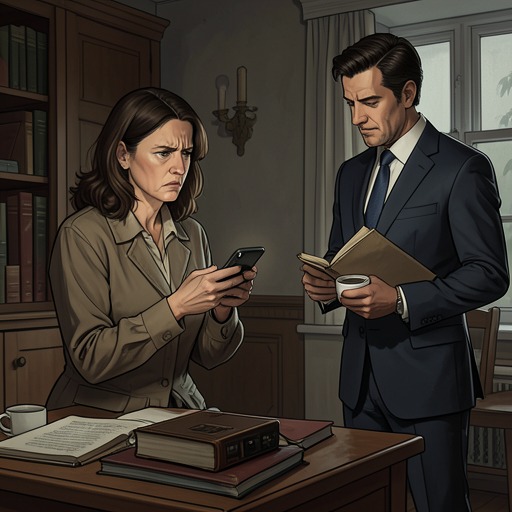
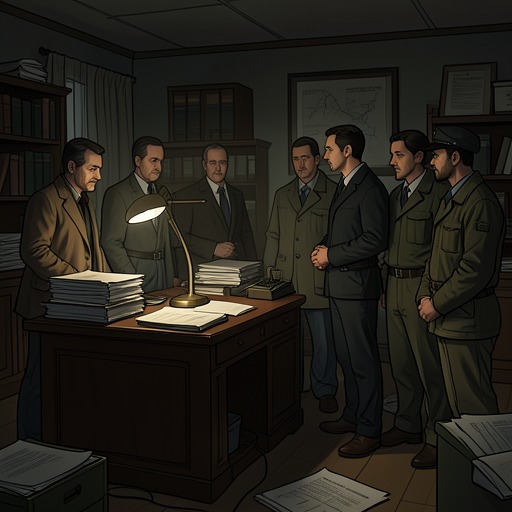
The partnership continues at the department. When Segura appears at his desk, dressed as though he has come straight from church, he asks Fellows whether anything is new. He learns that LaGrange has been assigned a public defender, and the two turn their attention to the case’s next investigative developments. The detail of Segura’s appearance gives the office scene a brief, ordinary contrast with the arrest and search, without changing the practical focus of their conversation.
Role in the Investigation
Segura’s scenes mark a crucial early step in the case against LaGrange: the warrant search produces physical evidence, and Segura communicates its significance to Fellows while distinguishing the apparent crime scene from the place where the killing likely occurred. Later evidence shifts the investigation’s direction. Fingerprint comparisons eventually show that Larry Stryker is not the match the investigators had expected, while a print associated with Roseanne Orozco matches an unidentified print from LaGrange’s house and another from Yuma County. That later turn belongs to the broader investigation and is not presented as a discovery made by Segura; it underscores that the evidence gathered at LaGrange’s home becomes part of a larger, changing inquiry.
The narrative gives Segura no independent resolution or extended personal arc. Instead, it uses him as a working detective whose presence makes the investigation collaborative and concrete: he answers the call from his day off, executes the search alongside Fellows, and reports what the search reveals. His limited but consequential role helps establish the case’s early evidentiary direction without making the first strong suspicion the final answer.